
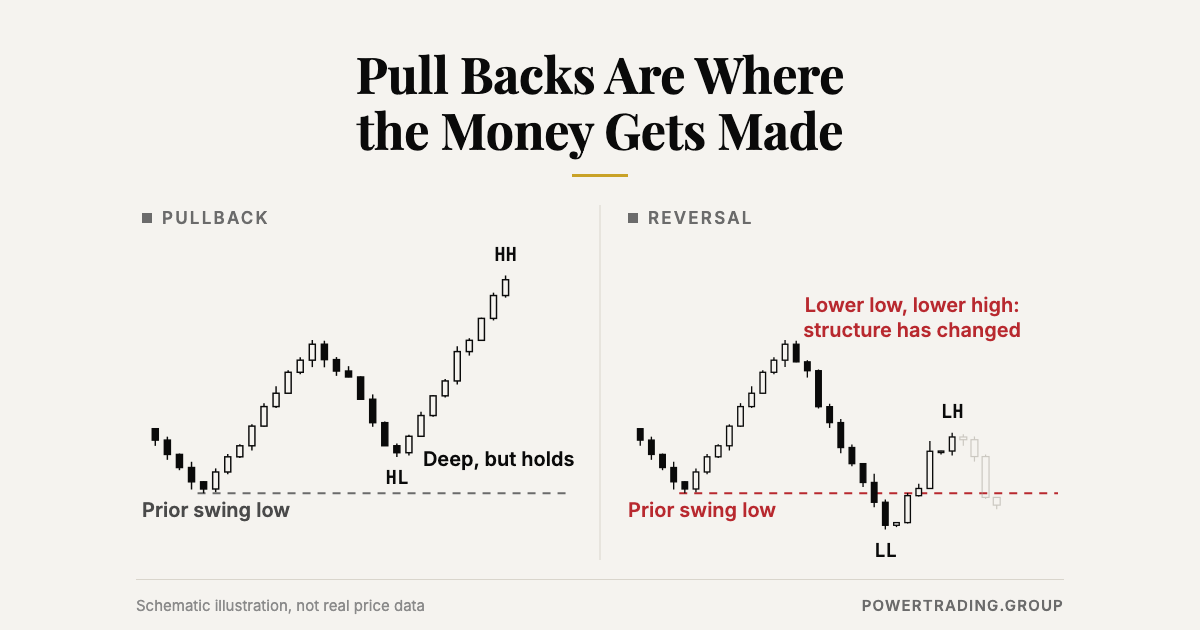
Pull Backs Are Where the Money Gets Made
Most traders watch pullbacks with anxiety. The ones making money watch them with a plan. Here’s how to flip that switch.
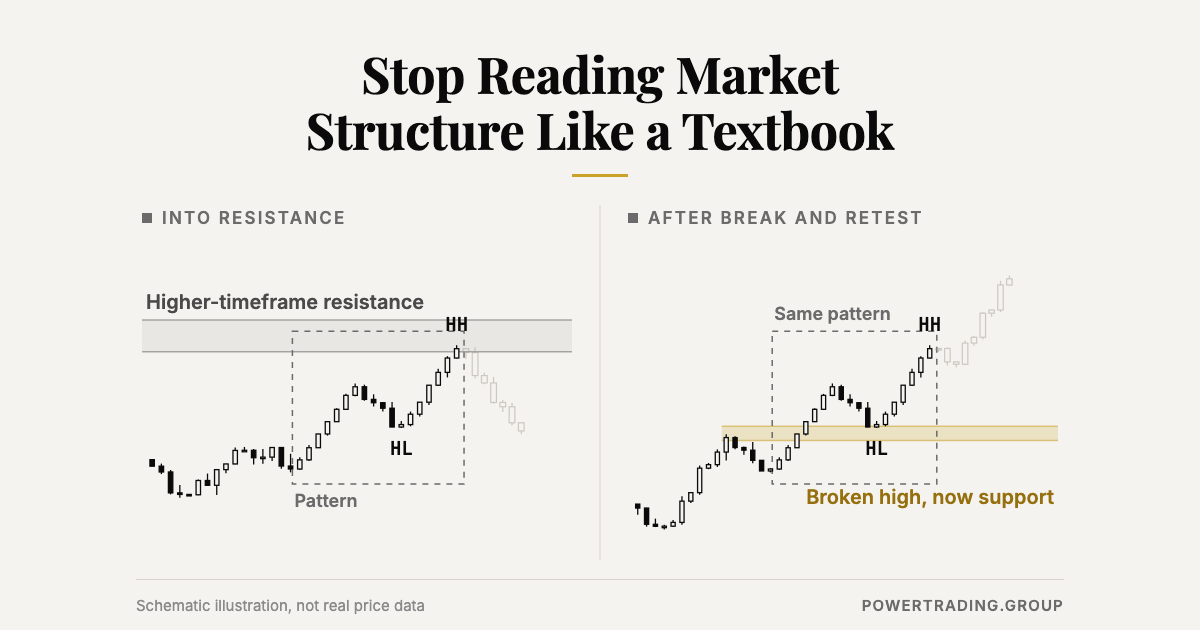
Stop Reading Market Structure Like a Textbook
Most market structure education teaches you what price has done, not where it’s doing it. Location changes everything about whether a structural pattern actually has edge.
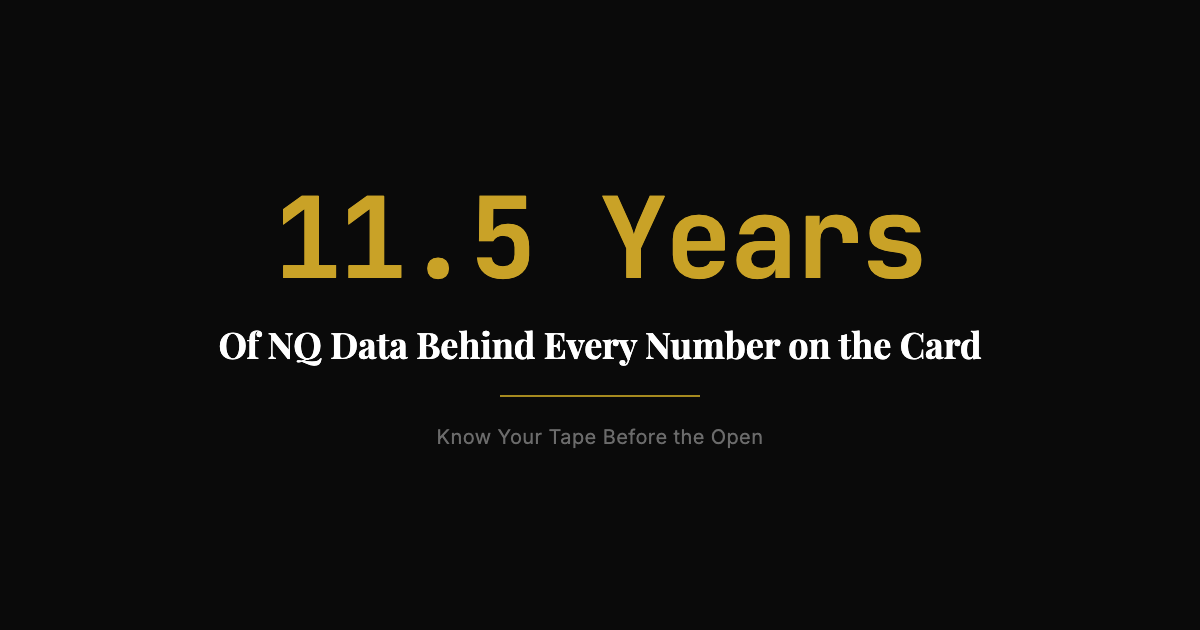
PTG StatMap Tells You What Kind of Day You Are Trading Before the Open
Before I mark a single level, I read the tape. PTG StatMap formalizes that backdrop read, validated across 11.5 years of NQ data, and locks it before the open.
How to Read Price Action: A Step-by-Step Process for Futures Traders
Price action trading isn’t about memorizing candlestick patterns. It’s a seven-step process of reading what the market is telling you in real time, from structure to entry to review.
Setups Are Cheap. Location Is the Edge.
Every trader has the same pullback entry. The same reversal candle. The same breakout continuation. What separates results isn’t the pattern. It’s where the pattern fires.
Support and Resistance: The Foundation Every Serious Trader Needs to Master
Support and resistance is the first thing I check every morning before the market opens. Here’s how to stop drawing lines and start actually trading the levels.
VPOC Trading Strategy: How to Use the Volume Point of Control
VPOC marks where the most volume traded in a session. Here's how to build a real trading strategy around it, including how to combine it with the full volume profile.
Bid Size vs Ask Size: What Every Trader Needs to Know
Bid size and ask size tell you exactly how much the market wants to transact at current prices. Here's what they mean and how to use them.
The 70% Win-Rate Algorithm Is Now a TradingView Indicator (And It Works on Stocks)
The algorithm behind AutoPilot Trader is now a standalone TradingView indicator for manual traders and equities players. Same 70% win-rate signals, any stock, no automation required.
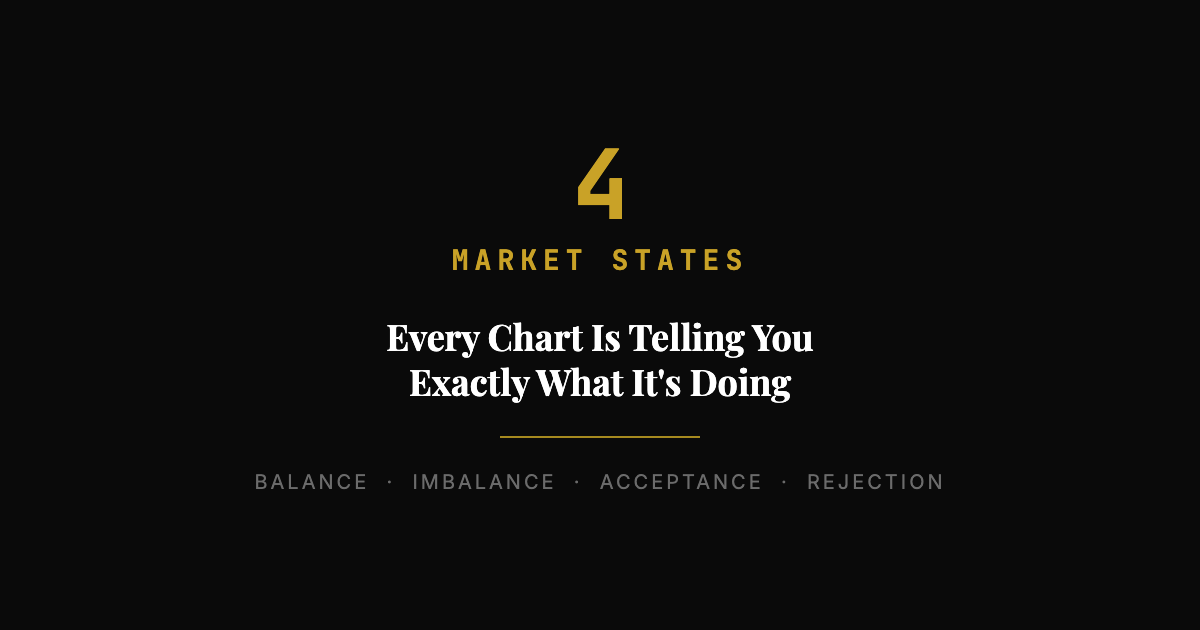
Balance, Imbalance, Acceptance, Rejection: The 4 Market States Every Trader Must Read
The market cycles through 4 distinct states: balance, imbalance, acceptance, and rejection. Learn to read them and you stop predicting, start observing.
The Spring Trading Setup: A Complete Wyckoff Guide to Identifying and Trading Reversals
The spring trading setup is one of the most powerful Wyckoff reversal patterns - and one of the most misunderstood. Here's exactly how to identify and trade it.
How to Read a Nasdaq Futures Chart: A Practical NQ Analysis Guide
Most traders find a Nasdaq futures chart and immediately look for signals. Here’s what they’re missing: how to actually read one.
NQ Futures: The Complete Guide to Trading Nasdaq-100 E-Mini Contracts
NQ futures are the instrument serious day traders gravitate toward. Here’s everything you need to know - from tick values and contract specs to market structure and risk management.
The Two Hour Trader Framework: What We Actually Teach (And Who It’s Really For)
One setup, two hours a day, and a real edge. Here’s an honest breakdown of what the Two Hour Trader course actually teaches and who it’s designed for.
What is RVOL in Trading? How to Use Relative Volume to Filter High-Probability Setups
Relative volume (RVOL) separates tradeable opportunities from time-wasting chop. Learn how to use RVOL to filter high-probability setups with real NQ futures examples and avoid the 5 most common mistakes.
Institutional Reference Points in Futures Trading: The Levels Professional Traders Watch
Retail traders draw lines on charts. Professional traders trade around reference points where billions shift hands. Learn the 4 levels that actually dictate market movement.
Price Action Trading in 2026: Why It Still Works When Everything Else Fails
Why pure price action methodology still outperforms indicators and AI-driven systems in 2026—and how to read market structure the way institutions do.
Why Do Most Traders Fail to Read Market Structure? (The 4-State Framework)
Most traders see patterns. Professionals see market states. The difference between balance, imbalance, acceptance, and rejection is the edge you’ve been missing.
Reading Market Conditions: A Professional Trader's Guide to Market Structure
Learn how professional traders identify optimal market conditions and adapt their strategies. Discover when to trade aggressively and when to step back from the markets.
How to Use the Volume Point of Control (VPoC)
One powerful tool that helps traders engage with price in better locations is the Volume Point of Control (VPoC), a vital component within the Volume Profile indicator. In this article, we will explore the significance of VPoC and how it can be leveraged by traders to enhance their market analysis and decision-making.