Trade Bot: What Actually Works (And Why Most Fail)
Most people searching for a trade bot are looking for the same thing: a way to remove themselves from the equation. Stop the second-guessing, stop the emotional entries, stop watching P&L tick up and down and feeling it in your chest. That's a legitimate goal. The problem is the market for trading bots is flooded with garbage, and the few legitimate systems out there are buried under layers of hype.
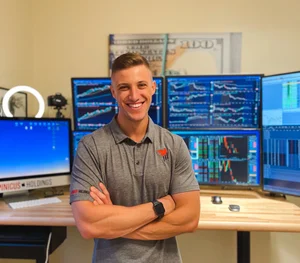
I've been trading futures for over a decade. I built AutoPilot Trader because I needed something that would execute my own strategy without me in the way. Not because I couldn't trade, but because I'd seen what consistent, unemotional execution looked like versus what I was capable of on a bad day. The gap was real. This article is my honest take on trade bots: what they actually are, why most fail, what makes one worth using, and how to evaluate whether automation belongs in your trading.
What a Trade Bot Actually Does
A trade bot is software that executes trades automatically based on a pre-defined set of rules. That's it. There's no magic. There's no artificial intelligence reading the tape the way a seasoned trader does. There's a set of conditions, and when those conditions are met, the system fires an order.
The conditions can be simple (price crosses a moving average) or complex (a multi-factor filter checking trend, volatility, and time of day simultaneously). The execution can be fast or slow. The risk management can be thoughtful or reckless. But at the core, every trade bot is just a ruleset translated into code.
What bots do exceptionally well:
Execute without hesitation
Follow risk parameters without emotion
Run the same logic in every session, including the ones where you would have skipped the trade
Remove the revenge trading cycle entirely
What bots cannot do:
Adapt in real time to genuinely novel market conditions
Apply contextual judgment the way a skilled discretionary trader can
Guarantee profits (nothing can)
Understanding this distinction matters. A trade bot is a tool. A hammer is a great tool for nails. It's a terrible tool for screws. Using a bot without understanding what it's actually built to do is how most people end up disappointed.
Why Most Trade Bots Fail
This is where things get uncomfortable. The honest answer is that the overwhelming majority of retail trade bots are either curve-fitted, vaporware, or designed primarily to be sold rather than traded.
Curve-fitting is the most common killer. A developer backtests a strategy across historical data, tweaks the parameters until the equity curve looks beautiful, and releases it. What they've done is build a system that would have worked perfectly in the past. Markets change. The edge evaporates. The system blows up.
Legitimate backtesting acknowledges this problem. It uses out-of-sample testing, Monte Carlo simulation, and realistic execution assumptions (slippage, commissions, partial fills). It doesn't cherry-pick the best parameter set; it tests whether the core logic holds across different market regimes.
The "AI" problem is worth addressing directly. Most bots marketed as AI-powered are running basic machine learning on historical data. Machine learning is a powerful tool but it's extremely vulnerable to overfitting. More parameters, more features, more complexity often means worse live performance because the model learned the noise, not the signal. Real edge in markets tends to come from simple, durable principles, not complex algorithms chasing every correlation in a dataset.
Crypto bots deserve a specific mention. The trade bot market is dominated by crypto-focused products because crypto runs 24/7, fees are high (good for affiliate revenue), and retail participants are often less experienced. Many of these bots have never been stress-tested through a real drawdown. Be careful.
If a bot can't show you its live forward-test results, a full equity curve including losing periods, and a clear explanation of what market conditions it doesn't work in, that's a red flag.
What Makes a Trade Bot Worth Using
Three things separate a legitimate automated system from the noise.
First: a genuine, explainable edge. The strategy has to make sense. You should be able to describe in plain language why the setup works, what market dynamic it's exploiting, and when it shouldn't be traded. If the developer can't explain the underlying logic without hiding behind "proprietary algorithms," be skeptical.
AutoPilot Trader automates one specific setup: the Two Hour Trader pullback-to-VWAP entry on NQ and other futures. That's it. One setup. The logic is transparent: trend identification, pullback to a dynamic level, volume confirmation, defined risk. The reason I built it as a single-strategy system is because that focus is actually a feature. A system that does one thing extremely well beats a system that does a dozen things mediocrely every time.
Second: honest performance data. I mean genuinely honest. Not just the good months. Not backtest curves optimized to look perfect. Real data with real losing periods.
The V3.3 backtest for AutoPilot Trader covers approximately 17 months (January 2025 through June 2026) with a blended win rate of roughly 70% across 1,142 trades on NQ and YM. But the number I'd rather lead with is the 2026 live forward-test: approximately $49,500 net through May, green every month except a flat January, with zero intervention through multiple drawdowns including April's roughly $17,000 peak-to-trough pullback.
April was actually the best month of 2026 at +$19,327 net. But it included a stretch where the bot was down significantly before recovering. Most traders would have shut it off right before the reversal. The entire value of systematic trading lives in that moment: trusting the process when it's uncomfortable.
One of our community members put it directly:
"Just two days ago, I was down about $900. If I had interfered instead of trusting the system, I wouldn't be celebrating a payout today." - TheCrispyManTrades
That's not a testimonial about the bot's performance. That's a testimonial about what automation does to your decision-making.
Third: realistic implementation. The best backtest in the world is meaningless if the live execution is a mess. Slippage, platform fees, internet connectivity, broker reliability, alert delivery speed, all of these create friction between what the backtest shows and what hits your account.
AutoPilot Trader runs on TradingView alerts routed through a third-party execution platform to your broker. The additional cost is $89/month (TradingView Premium at $49 and the execution platform at $40). That's a real cost that needs to factor into your expectations. A system that shows $500/month in backtest profit after a $89/month overhead is a very different proposition than one netting $3,000/month.
Are Trading Bots Legal?
Yes. Fully legal. Algorithmic trading at the institutional level has existed for decades. Retail automation on platforms like TradingView, NinjaTrader, and similar is widely used and completely legitimate.
The confusion sometimes comes from specific rules at prop firms (more on that in a moment) or platform terms of service for certain exchanges. But for standard futures and equity markets, there is nothing illegal about using automated execution.
Trade Bots and Prop Firms
This is where it gets interesting for a lot of people searching "trade bot." The funded trading world has exploded over the past few years, and prop firm evaluations are one of the most compelling use cases for automation.
The logic is straightforward: prop firm evaluations test consistency, drawdown control, and rule-following over a defined period. Those are exactly the things a well-designed bot excels at. Human traders fail evals because they revenge trade after a loss, hold positions too long, or abandon their plan on a bad day. A bot doesn't do any of that.
AutoPilot Trader's Long-Only mode was specifically designed with prop firm evaluations in mind. NQ Long-Only backtests to 78.19% win rate and a 2.41 profit factor over the 17-month testing window. The live results are there, too. Multiple community members have passed evaluations with it.
"APT just passed the first eval for me. Took a few tries but we are finally here, adjusting the risk now." - Ivo Schnaus
A few important notes on using any bot for prop firms: verify with the specific firm that automated trading is permitted. Most modern prop firms allow it but rules vary. If you're evaluating with TradeDay or Tradeify, use code OPINICUS for the best available pricing on either. Both are firms I work with directly.
What to Look For When Evaluating Any Trade Bot
I want to give you a practical framework here, whether you're considering AutoPilot Trader or anything else in the market.
Check the backtest methodology. Was it done in-sample only? Were the parameters optimized on the same data used to measure performance? A legitimate test uses a walk-forward approach or out-of-sample validation. Ask for the Monte Carlo results.
Find the losing periods. Every system has them. If the equity curve shown has no drawdowns or recovery periods, someone is either lying or hasn't traded it long enough. Ask how the system performed during specific market events: rate hike cycles, volatility spikes, trend-less choppy months.
Understand the underlying logic. You should be able to explain the strategy in a sentence. If you can't explain what market condition the bot is designed to exploit, you won't know when to trust it or when to pause it.
Understand the full cost structure. License fees, platform fees, brokerage commissions, slippage. Model out a realistic scenario where the bot performs at 60% of its backtested results. Is it still worth running?
Look for active traders, not passive salespeople. The person selling you the bot should be running it themselves, live, in a real account, with published results. I trade every day. APT runs in my account. When it draws down, I feel it too. That alignment matters.
Who a Trade Bot Is Right For
Not everyone should be using automation. Here's my honest take on who benefits and who doesn't.
Automation works well for traders who have an execution problem more than an analysis problem. If you understand market structure, can identify a good setup, but keep sabotaging yourself with impulsive decisions, a rule-based system removes the human variable. That's a real solution to a real problem.
It also works well for people with limited screen time. If you have a career, family, or other priorities that make sitting at a desk from 8:30 AM to 4:30 PM ET impossible, a bot that runs your strategy during those hours while you work is genuinely valuable. Not as a replacement for learning to trade, but as a way to participate in markets without sacrificing everything else.
It works less well for people who haven't developed any trading foundation at all. A bot is not a substitute for understanding why a strategy works. If the system draws down 20%, you need to know whether that's within normal parameters or a sign the market has changed. That judgment requires some baseline understanding.
If you want to develop that foundation while also getting exposure to how automation actually works in practice, the Trader's Thinktank gives you both. Members get access to APT Signals (the same entry logic APT automates, plotted as a manual indicator), live daily coverage, and the full Two Hour Trader course included. You can watch exactly how the bot's logic triggers in real market conditions before committing to full automation.
For context on what that looks like in practice, the Trading Bot Passes 50K Prop Firm Evaluation breakdown walks through a real eval pass step by step. If you want the broader data picture, the V3 Complete Analysis covers the full methodology.
The Bottom Line on Trade Bots
Most trade bots on the market are not worth your time or money. They're curve-fitted to historical data, sold aggressively by people who make their income from subscriptions rather than trading, and abandoned when they stop working.
A legitimate trade bot is a systematized version of a proven trading edge. Nothing more, nothing less. It executes the same logic every session, removes emotional interference, and gives you the discipline that most traders struggle to maintain manually.
The edge still has to exist first. The system still has to be transparent. The live results still have to be real.
If you're evaluating your options, start with the questions: What does this system actually trade? Can the developer explain the logic in plain language? Where are the losing periods in the performance history? What does it cost to run after all fees?
Answer those honestly, and the bad options filter themselves out pretty quickly.