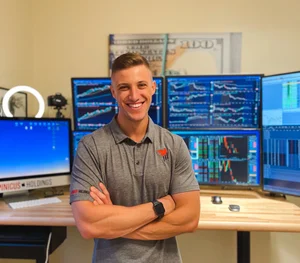
Futures Trading Automation: From Manual Trader to Bot Operator in 30 Days
Most traders approach automation backwards. They hear about trading bots, get excited, buy something off-the-shelf, flip it on, and watch it slowly bleed their account over the next two months. Then they write off the whole idea.
I've watched this play out enough times to know the pattern. And I've also watched traders make the transition the right way, going from screen-dependent manual traders to confident bot operators in about 30 days. Not by rushing the process, but by following a specific sequence.
This is that sequence.
Why 30 Days?
Thirty days isn't arbitrary. It's roughly the minimum time needed to go through a complete psychological and operational transition without cutting corners. You need time to understand what you're automating, time to set up infrastructure properly, time to watch the system trade in paper mode, and time to build the mental framework for stepping back and letting it work.
Rush any of these phases and you'll either abandon the system too early or blow up your account trying to override it.
Week 1: Know What You're Automating
This is where most traders skip straight past, and it kills them later.
Before you touch a single piece of software, you need to get brutally honest about your manual trading strategy. What specifically are you trying to automate? And more importantly, is it actually automatable?
Here's a hard truth: a lot of what traders think is their "strategy" is actually improvisation with post-hoc justification. If you can't write down your entry criteria in three sentences or fewer, you don't have a strategy yet. You have a collection of reactions.
Spend Week 1 doing this audit:
Define your setup in objective terms. Not "I enter when price looks like it's reversing" but "I enter long when price tests a prior session high during the first two hours, pulls back no more than 0.5%, and then takes out the high on above-average volume." One version is automatable. The other is discretionary trading dressed up as a system.
Identify your parameters. What are your profit targets and stop losses in points or percentages? What times do you trade? What do you do if the first trade is a loser? Every one of these needs a specific, written answer.
Figure out what you're NOT automating. Some things should stay discretionary. Major news events, unusual market conditions, FOMC days where normal price action goes out the window. A good system has built-in filters for this. You need to know where your automation ends and your judgment begins.
This week isn't glamorous. It's a lot of staring at your trade journal and being honest with yourself. But traders who skip it spend Weeks 3 and 4 constantly second-guessing their bot because they never fully understood what it was supposed to be doing.
If you don't have a clearly defined manual strategy to automate, the Two Hour Trader is worth serious consideration. It gives you one specific, objective setup, the exact framework that powers the AutoPilot Trader, documented with entry criteria clear enough to put into code.
Week 2: Infrastructure Setup
Okay. You know what you're automating. Now you need the right tools to do it.
The infrastructure stack for automated futures trading has three layers:
Layer 1: Charting and signal generation. This is where your strategy logic lives. TradingView is the industry standard for this, and for good reason. The Pine Script language is accessible, the community is enormous, and the alert system is reliable enough to base actual trades on.
Layer 2: Execution bridge. TradingView generates alerts, but it doesn't talk directly to your broker. You need a third-party platform to receive those alerts and translate them into actual orders. This is a critical piece of infrastructure that most beginners underestimate. A bad execution bridge means missed entries, duplicate orders, or trades firing at the wrong size. Do your research here.
Layer 3: Your broker. Not all brokers play nicely with automated systems. You need a futures broker with a solid API, reliable uptime, and reasonable commissions per contract. Latency matters less for a 2-hour-window strategy than it does for HFT, but reliability matters enormously.
Get all three layers working together this week, but don't go live. The goal is a connected, functional setup in paper trading mode. Spend time learning the dashboard, understanding how orders flow through the system, and making sure alerts are firing correctly.
Also this week: position sizing. Before you ever trade a live dollar, you need a clear, written position sizing rule that you will not deviate from. Based on your account size, your max daily loss, and your strategy's historical drawdown profile, what's your contract count? Write it down. Automate it if you can. This number exists to protect you during weeks three and four when the temptation to override the system is highest.
Week 3: Paper Trading and Validation
This is the most undervalued week in the whole process, and the one most impatient traders try to compress.
Don't.
Paper trading is not just about confirming that your system generates profits. It's about stress-testing the entire infrastructure and, more importantly, stress-testing yourself.
Here's what you're actually watching for during Week 3:
Does the system execute correctly? Are orders firing at the right price? Are targets and stops being managed as expected? Are there any obvious bugs or misfires? You want to find these in simulation, not with real capital.
How do you feel watching it trade? This is the real test. You'll notice urges to override entries that "don't look right." You'll feel anxiety when a trade moves against you before hitting the target. You'll second-guess risk parameters you set with a clear head. These are all normal reactions, and they're data about what the next phase is going to feel like.
Are you comfortable with the drawdown? On paper, a 5% drawdown is fine. In practice, for a lot of traders, seeing their account decline by 5% over several days triggers panic regardless of what the backtests say. Week 3 is where you find out if your position sizing matches your actual psychological risk tolerance.
Log everything. Keep a journal of what the system did and, separately, what you wanted to do. The gap between those two things is where your psychological work happens.
Martin Pena, a member of our community, put it well:
"Since being here I've had a much clearer understanding of when and where to trade. You've helped simplify my trading which has led to my first payout."
That simplification is exactly what a well-validated system gives you. Not more information, less. One setup. Consistent execution. The rest is noise.
Week 4: Going Live With Risk Limits
By the time you hit Week 4, you should have at least five to seven paper trading days logged, a clear understanding of how the system executes, and some honest self-knowledge about where your override instincts kick in.
Now you go live. But carefully.
Start at minimum size. If your plan is to trade two NQ contracts per setup, start with one MNQ. The micro contract on the Nasdaq is one-tenth the size of the standard contract. It lets you feel real P&L without catastrophic exposure during the psychological adjustment period.
Set hard daily loss limits before you start. This isn't optional. Every serious automated trading setup includes a broker-level daily loss limit that shuts the system down if you breach it. Set it at a number where you'll be frustrated but not financially damaged. You can always expand it later as you build trust in the system.
Do not touch the parameters. This is the hardest rule to follow. You'll have bad days. The system will take losses. Everything in your brain will tell you that if you just adjusted the target slightly, or tightened the stop, or filtered out one more condition, you'd have caught those winning trades and avoided the losers. That's hindsight bias talking, and it has destroyed more promising automated traders than any bad market condition ever has.
For anyone using the AutoPilot Trader, this week is where the white glove setup call pays dividends. Having the configuration done right, by people who have set this up hundreds of times, removes an entire category of Week 4 mistakes.
The Psychological Adjustment Nobody Warns You About
Here's something that doesn't come up enough in discussions about trading automation: going from manual trader to bot operator is a genuine identity shift, and it can be surprisingly disorienting.
Manual traders derive a certain psychological satisfaction from being engaged. You're reading the tape, making decisions, feeling clever when your read is right. When you automate, you give all of that up. The system makes the decisions. You just watch.
For a lot of traders, that first week of live automated trading feels empty. Sometimes it feels like you're not really trading at all. And paradoxically, that disconnection can lead to interference, tweaking, overriding, because you need to feel involved.
This is normal. It passes. The key is having somewhere to direct that analytical energy productively. In our Trader's Thinktank community, a lot of our automated traders stay actively engaged with the daily premarket prep and live analysis not because they need it for their trading decisions, but because it keeps the analytical part of their brain satisfied while the bot handles execution. The community context also provides accountability when override temptations get strong.
As Desmond Young shared after making the transition:
"With Kyle's course and mentorship, I couldn't be funded without him. I passed my first funded account as of July 25th 2024."
That kind of result doesn't happen by accident. It happens because the transition was structured, supported, and approached with patience.
Common Mistakes That Derail the Transition
Automating a strategy that isn't actually defined. Covered this above, but it bears repeating. Vague discretionary rules don't become a profitable system just because you write code around them.
Skipping paper trading. You don't know what your system actually does until you watch it trade. Backtests tell you what it would have done. Paper trading tells you what it does, which includes all the edge cases and market conditions your backtest might not have covered.
Oversizing on launch. Starting at full size during your psychological adjustment period is asking for trouble. The emotional response to live P&L is significantly stronger than your paper trading experience will prepare you for. Give yourself room.
Optimizing too early. After two weeks of live trading, you don't have enough data to meaningfully evaluate performance. You have enough data to generate opinions, which is much more dangerous. Resist the optimization urge until you have at least 50-100 live trades.
Running the system on a cheap or unreliable infrastructure. Execution matters. A slow execution bridge or an unreliable broker connection can turn a profitable strategy into a breakeven one through slippage and missed entries alone. Invest in the right tools.
Going it alone. Automation doesn't mean you stop learning. The best bot operators I know are also the most engaged students of market structure and strategy development. Having a community to process results with, ask questions in, and stay sharp through makes a material difference in long-term outcomes. That's the entire premise behind the Trader's Thinktank.
The 30-Day Checkpoint
After 30 days, you should have: a clearly documented strategy, a functional three-layer infrastructure, at least a week of paper trading data, and one to two weeks of live trading at conservative size.
You probably won't have consistent profits yet. That's not the goal at 30 days. The goal is a clean, validated setup with no critical mistakes in the foundation. Profits come from that foundation, given time and enough trades.
The traders who make it in automation are almost never the ones who got it right immediately. They're the ones who built it right from the start and then had the patience to let it run.
If you want to skip the infrastructure build and go straight to a proven, backtested system, the AutoPilot Trader is worth a serious look. Every figure is published on its performance page, drawdowns included, and setup is handled on a live Zoom call so you don't have to figure out the three-layer stack on your own.
But whatever path you choose: do not skip the 30 days. The sequence exists for a reason.