How Long Does It Take to Become a Profitable Trader? (The Honest Answer)
Let me tell you something most trading educators won't say out loud: the majority of people who start trading never become consistently profitable. Not because they're not smart enough. Not because the markets are rigged against them. But because they come in with completely wrong expectations about what this journey actually looks like.
I've been trading full-time for over a decade. I've mentored hundreds of traders. And the single biggest predictor of whether someone makes it isn't their intelligence, their capital, or even their strategy. It's whether they have a realistic picture of the timeline ahead of them.
So let's build that picture. Honestly.
The Uncomfortable Truth Nobody Wants to Hear
Most people who try day trading quit within the first two years. A large portion blow up their accounts before they ever develop a real edge. The statistics on retail trader failure are sobering, and they exist for a reason.
Here's what typically happens: someone discovers trading, watches a few YouTube videos, sees someone claiming they made $10,000 in a week, and thinks "I can do that." They open an account, start trading, and lose money. So they buy a course. Still lose money. Try a different strategy. More losses. Eventually they either run out of capital, run out of patience, or both.
The ones who make it don't avoid losses. They just understand that losses are part of the learning process, not evidence that they're doing it wrong.
But here's what I want you to hold onto: the traders who do make it aren't special people. They're persistent people who refused to let go until the pieces clicked.
What "Profitable" Actually Means
Before we talk about timelines, we need to get clear on what we're actually aiming for. Because "profitable" can mean a lot of different things, and most beginners are chasing the wrong version.
A single big win is not profitability. I've seen traders hit a $5,000 day and think they've arrived, then give it all back (plus more) over the next two weeks. That's not an edge. That's variance.
Real profitability looks like this:
Consistency over months, not days. Three to six consecutive profitable months with controlled drawdowns is a meaningful signal.
Positive expectancy. Your average win, multiplied by your win rate, consistently exceeds your average loss multiplied by your loss rate.
Defined process. You can explain exactly why you entered and exited every trade, and those reasons hold up over a large sample size.
Emotional stability. You're not swinging between euphoria and despair based on daily P&L.
Once you understand that this is the bar, the timeline question becomes clearer.
A Realistic Timeline: Month by Month
Every trader's journey is different, but after watching hundreds of people go through this process, there are some patterns that show up consistently.
Months 1 to 3: The Expensive Education Phase
You're going to lose money here. Full stop. Think of it as tuition. The goal during these months isn't to make money. It's to lose as little as possible while learning as much as possible.
Most new traders try to skip this phase by trading too large too fast. Don't do that. Trade small. Use paper trading if you need to. Study price action, market structure, and how the instrument you're trading actually behaves during different sessions.
If you're trading NQ futures, spend time in the morning session. Learn where the liquidity is. Notice how the market reacts around key levels before you risk real capital at them.
During this phase, you're not building a system yet. You're building pattern recognition.
Months 4 to 6: Finding a Framework
This is where most traders start to narrow their focus. Instead of trading everything and every setup, you pick one or two setups and go deep on them.
This is also when many traders discover resources like the Two Hour Trader framework, which focuses on one high-probability setup executed during the highest-quality window of the trading day. That focus is exactly what this phase demands.
Your losses should be getting smaller here, not because you're trading better yet, but because you're trading less and being more selective. That restraint is actually the skill.
Months 6 to 12: Inconsistent but Emerging
Something starts to happen around the six-month mark for traders who are journaling consistently and actually reviewing their trades. You start to see your own patterns.
You realize you tend to revenge trade on Fridays. You notice your best setups come in the first 90 minutes of the session. You see that you cut winners too early when you've already had a small loss that day.
This phase feels frustrating because you're not consistently profitable yet, but you can see the path. You know what you're doing wrong. You just haven't fixed it yet.
This is arguably the hardest phase psychologically. The people who quit here were often only months away from a real breakthrough.
Year 1 to 2: Building the Edge
By 12 to 18 months, traders who are still in the game and still studying start to see their first genuinely consistent stretches. Not perfect months. Not life-changing money. But real consistency: controlled drawdowns, defined setups, growing confidence in the process.
Traders who have a structured environment accelerate through this phase faster. The traders in our Trader's Thinktank community who are actively reviewing trades, getting daily premarket analysis, and talking through setups with other professional traders compress this timeline meaningfully. When you're not figuring everything out alone, you stop making the same expensive mistakes that solo traders make repeatedly.
As one of our members, Martin Pena, put it:
"Since being here I've had a much clearer understanding of when and where to trade. You've helped simplify my trading which has led to my first payout."
Simplification is the theme. The traders who make it aren't the ones with the most complex systems. They're the ones who stripped everything back to what actually works.
Year 2 and Beyond: Scaling and Refining
Once you have genuine consistency, the work shifts. Now you're focused on sizing up without letting psychology get in the way, refining your edge as market conditions evolve, and building the discipline to stay in your lane even during rough patches.
This phase never really ends. I'm still refining my approach after more than a decade. The market changes. You have to adapt.
But the difference between year two and year one is that you're doing it from a position of proven competence. You know your edge works. You're just making it better.
What Speeds Up the Process
Certain things accelerate the timeline significantly. These aren't shortcuts. They're legitimate accelerators.
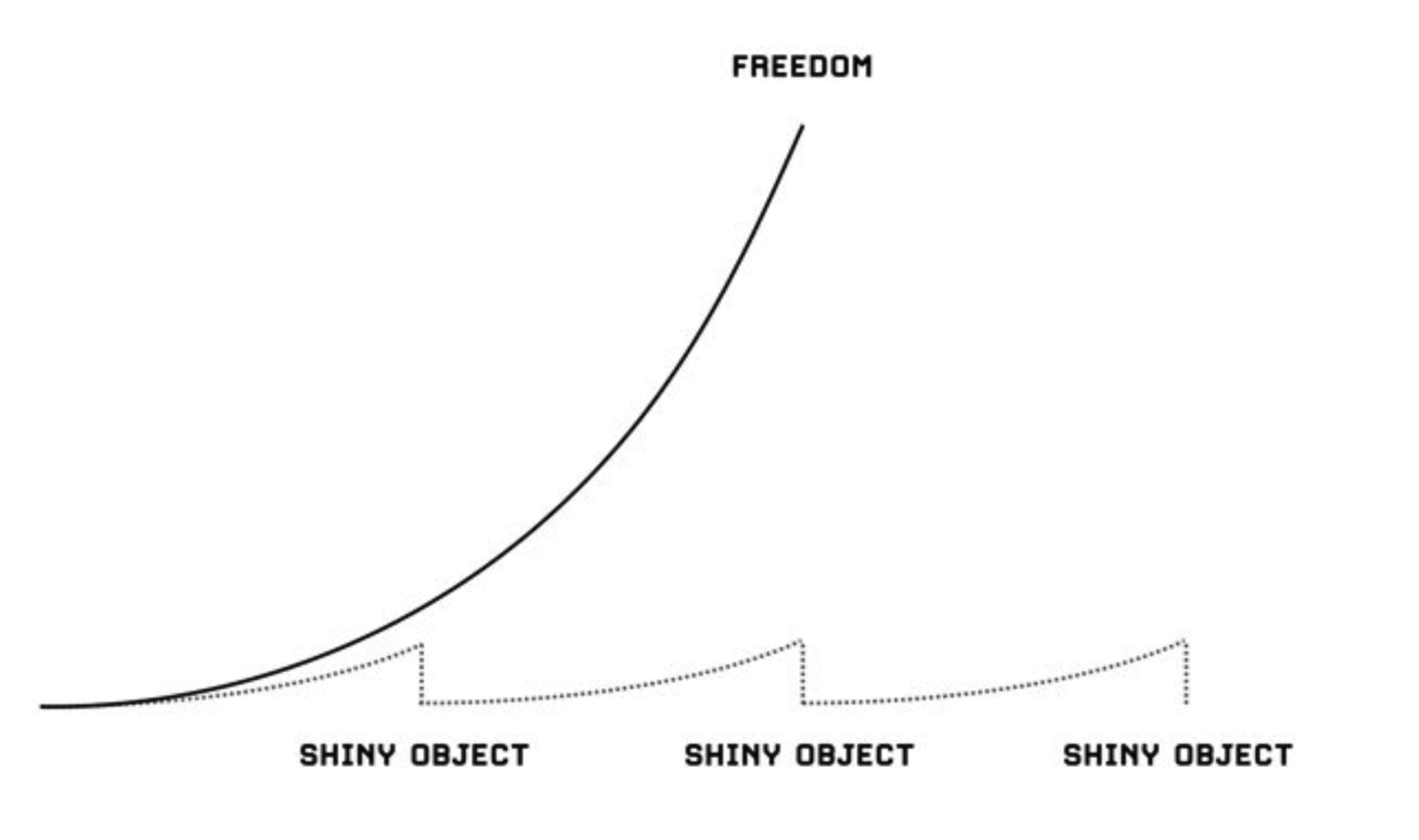
A focused strategy. Traders who learn one setup deeply always outpace traders who dabble in five. The Two Hour Trader approach is built on this principle. One setup, one window, executed consistently. That singular focus produces results that scattered curiosity never can.
Consistent journaling. I cannot overstate this. Traders who review their trades honestly, looking for patterns in their behavior and outcomes, improve at two to three times the rate of traders who don't. You cannot fix what you can't see.
Community and accountability. Trading alone is hard. Not because you need someone to tell you what to do, but because isolation breeds bad habits and distorted thinking. Having other serious traders around you, especially those further along in the journey, changes your trajectory.
Hatem, a member who joined the Thinktank three months in, described it this way:
"Kyle is an excellent teacher who can convey concepts without making you feel stupid. I signed up 3 months ago and I feel that my trading has progressed years."
Risk management from day one. Traders who lose less in the early phases have more capital to learn with. Simple math. Protect your account during the learning phase.
Understanding price action. If you're reading charts like a dartboard, you're going to struggle. Developing real price action skills and understanding market structure is foundational. Everything builds on top of it.
What Slows You Down
Just as important to understand.
Chasing systems instead of principles. If you're constantly switching strategies every time you have a drawdown, you're never getting the sample size needed to know if anything actually works. Stick with something long enough to actually evaluate it.
Ignoring psychology. Most traders think their problem is technical. It's not. Trading discipline and managing fear and FOMO are the real barriers for most developing traders. Fix the mental side first.
Overleveraging early. This is how accounts blow up. Trading too large during the learning phase doesn't speed up the process. It just makes the lessons more expensive and potentially unrecoverable.
No structure around the day. Profitable trading isn't sitting in front of charts for eight hours hoping something works. It's having a clear pre-market plan, defined criteria, and the discipline to stop trading when you've hit your daily loss limit. Without that structure, you're just gambling with more steps.
Going it alone. Seriously. The cost of avoidable mistakes in trading is enormous. Most of the painful lessons that take solo traders 18 months to learn can be learned in three months with the right community and mentorship. That's not marketing. That's just math.
A Word on Prop Firms
A lot of newer traders are using prop firm evaluations as a way to access larger capital. If that's your path, the timeline question is even more critical. Prop firms require consistent, rule-based execution. You need to already have a working edge before you start an evaluation. Trying to develop your strategy during a funded challenge is one of the fastest ways to fail it.
Get your edge first. Then get funded.
The Wyckoff-based price action framework and the Two Hour Trader setup have both proven effective for prop firm environments because they're structured, rule-based, and consistent. That's exactly what evaluations reward.
The Real Answer
So how long does it actually take?
For traders who approach this with the right mindset, study consistently, manage risk from day one, and have a structured environment around them: 12 to 24 months to genuine, repeatable profitability.
For traders who go it alone, switch strategies constantly, trade too large, and skip the journaling work: much longer. If they ever get there.
The difference isn't talent. It's process.
If you're at the beginning of this journey, resist the urge to rush it. Set up the right foundations. Learn price action. Study how markets actually move. Trade small. Review your trades. Get around people who are ahead of you on the path.
And know that the timeline, while longer than most people want to hear, is absolutely worth it. There is no career that gives you the freedom, autonomy, and upside that full-time trading does. But you have to earn it.
As a member of our community, D Wall, described reaching that milestone:
"Finally, the first profitable year since 2020. More than 85% of days I journaled."
One decision. A consistent process. The patience to see it through.
That's the real answer.