AI Trading Platforms: What They Actually Are (And Why Most Miss the Point)
Every few months, a new wave of "AI trading platforms" floods the market. The promises are identical: machine learning, algorithmic precision, passive income, financial freedom. The marketing is slick. The results, for most people who buy in, are disappointing at best.
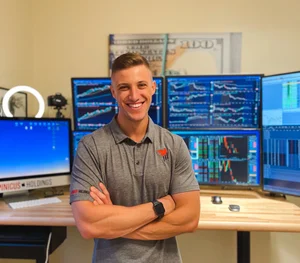
I've been trading NQ and ES futures full-time for over a decade. I've watched the AI trading hype cycle repeat itself more times than I can count. And I've built my own automated trading system, AutoPilot Trader, from scratch, not as a product pitch, but because I genuinely needed to solve a problem: how do you remove emotional interference from a strategy that already works?
So let me give you a straight take on AI trading platforms in 2026. What they actually are, where most of them fail, and what separates the tools worth your time from the ones that will quietly drain your account.
What "AI Trading Platform" Actually Means
The term gets used loosely, and that's intentional. Calling something "AI-powered" in 2026 is marketing shorthand for "we use some form of algorithmic decision-making." That covers an enormous range of things, from genuinely sophisticated machine learning models to a basic moving average crossover with a chatbot interface slapped on top.
For practical purposes, most retail-facing "AI trading platforms" fall into one of three buckets:
Signal generators: These scan the market and alert you when certain conditions are met. You still make the trade. The "AI" is a screener with a fancier name.
Fully automated bots: These connect to your brokerage and execute trades without your input. Performance varies wildly. Most are curve-fitted to historical data and fall apart in live markets.
Analysis tools: Think chart pattern recognition, sentiment analysis, earnings predictors. Useful for research, not execution.
None of these categories are inherently bad. The problem is when platforms blur the lines, or worse, when they lead with "690% APY" headlines (yes, some actually do this) without any serious explanation of risk, drawdown, or the conditions under which those numbers were generated.
Here's the thing: AI cannot manufacture edge where none exists. A well-designed system amplifies and executes an existing edge with consistency. That's it. If the underlying strategy isn't proven, the automation just executes your losses faster.
Why Most AI Trading Bots Underperform
The failure rate for retail trading bots is high, and the reasons are predictable once you understand how they're built.
Overfitting to historical data. Most developers backtest a strategy over a specific window, tweak the parameters until the equity curve looks great, and call it done. The problem is they've essentially memorized the past. When market conditions shift, the system has no mechanism to adapt. This is why backtests that look clean often produce real-money results that don't come close.
No genuine edge. A lot of platforms are built by developers, not traders. They know how to code and how to connect to an API, but they haven't spent years in the market learning what actually creates repeatable outcomes. The strategy underneath the automation is flimsy, and no amount of machine learning covers for that.
The intervention problem. Even when a bot has a solid edge, users sabotage it. They override trades when things look scary. They pause the system during drawdowns (which are a normal part of any strategy) and miss the recovery. The psychological pressure of watching automated losses in real time turns out to be nearly as difficult as discretionary trading. If you're going to use automation, you have to genuinely trust the system. That trust has to be built on real evidence, not a backtest equity curve that never had a difficult month.
One member in our Trader's Thinktank community said it perfectly:
That's the psychological reality of automation. The system works. Staying out of the way is the hard part.
What to Actually Look For in an AI Trading Platform
If you're evaluating platforms, here's the filter I'd apply:
Real forward-test results, not just backtests. Any platform can show you a beautiful backtest. What matters is how the system performed on data it had never seen, live, with real money or at minimum a genuine out-of-sample test. Ask for monthly performance logs. Look for drawdowns. If every month is green and there's no volatility in the results, someone is either cherry-picking or showing you a backtest dressed up as live performance.
Transparent strategy logic. You should understand, at least conceptually, what the system is doing and why. "Our proprietary AI identifies opportunities" is not an explanation. If the developer can't tell you the edge in plain English, there's probably not one.
Reasonable expectations. Any platform promising triple-digit annual returns is either taking on catastrophic risk, using leverage that will eventually blow up, or lying. Real automated trading systems have winning months and losing months. A 70% win rate with a solid profit factor across hundreds of trades is genuinely excellent. It's not exciting, but it compounds.
Integration with real brokers and real execution. A lot of "AI trading apps" exist entirely in their own ecosystem. You deposit funds with them, they trade on your behalf, and you're essentially trusting a company you've never heard of with your capital. This is a completely different risk profile than running automation through your own brokerage account where you maintain full control of your funds at all times.
AutoPilot Trader: What Automation Built on a Real Edge Actually Looks Like
I'm going to be direct here because I think context matters: AutoPilot Trader is PTG's automated trading system, and I built it to solve a specific problem I had as a discretionary trader.
The Two Hour Trader framework is the setup I've traded personally for over a decade. It's a pullback-to-VWAP entry during the first two hours of the trading session on NQ and ES futures. The edge is real because I've traded it thousands of times and understand exactly why it works and when it doesn't. What AutoPilot Trader does is take that exact logic and execute it without me having to be at the screen, and without the emotional drag that affects every discretionary trader, including me, on bad days.
Every AutoPilot Trader figure is published on the performance page, drawdowns beside returns and losing months included, and the record is labeled as simulated because it is.
APT runs through TradingView alerts connected to a third-party execution platform that communicates with your broker. Your funds stay in your own account. You maintain full control. The setup takes about 35 minutes on a live Zoom call where we walk through everything together.
If you want to see the signals before committing, every Trader's Thinktank membership includes THT Signals, the manual indicator that plots the same signals, entry level, first two targets and initial stop as APT's Two Hour Trader strategy. You can watch the setups form on your own charts before deciding whether automation makes sense for you.
The Prop Firm Angle
If you're exploring prop firms, I trade with both TradeDay and Tradeify. Use code OPINICUS on either platform and you'll get the best available pricing. TradeDay is at tradeday.com and Tradeify is at tradeify.co.
For a fuller breakdown of how to approach prop firm evaluations as a futures trader, this guide on how to pass a prop firm evaluation is a good starting point.
If You're New to Automation
If you're coming to this topic without much trading experience, I want to be honest with you about something. Automation doesn't replace needing to understand the market. The traders who get the most out of APT are typically people who already have some grasp of how futures work, who understand what a drawdown means in the context of a strategy, and who can trust a system through a difficult week without shutting it down.
If you're starting from scratch, the better first step is learning to trade before automating. That's exactly what the Two Hour Trader course is built for: one proven setup, taught in 43 minutes, designed around the same framework APT automates. Understanding the strategy makes you a much better automated trading operator, because you know what the system is supposed to be doing and why.
For a broader foundation, the day trading for beginners guide covers the mechanics of futures trading before you start thinking about automation. And if you want to understand the edge that underlies the entire PTG methodology, mastering your trading edge is the conceptual foundation.
The Bottom Line on AI Trading Platforms
The market for AI trading tools is noisy. There are legitimate platforms doing serious work, and there are a lot of platforms selling the idea of automation without the substance underneath it.
The question worth asking about any platform is simple: what is the actual edge, and where is the evidence that it works on data the system hadn't seen before? If the answer is vague or the only proof is a backtest, that's your answer.
Automation is genuinely powerful when it's built on a real, proven strategy and executed with the discipline to trust the system through normal variance. That combination, real edge plus execution discipline, is what separates the AI trading platforms worth your time from everything else.
If you want to go deeper on what that looks like in practice, the Trader's Thinktank is where this conversation happens every day, from daily premarket analysis to live trade reviews to the group coaching sessions that have helped hundreds of traders build the foundation that makes automation actually work. You can find everything at powertrading.group/pricing.
Trading futures involves substantial risk of loss and is not suitable for all investors. Past performance is not indicative of future results. AutoPilot Trader backtest results are based on historical data with specific parameters and do not guarantee future performance. Individual member results referenced are not typical.